
Situational Awareness in Urban Environments and Everyday Life
Situational awareness is the quiet force that keeps you ahead.
It’s not paranoia—it’s precision.
It’s the discipline of noticing patterns others miss, sensing subtle shifts in behavior or energy, and staying one step ahead of a threat, mistake, or misstep.
Whether you’re walking through city streets, navigating a tense public setting, or just moving through your daily routine, your mind is your most powerful tool. In a world where uncertainty can strike without warning, urban environments demand a level of attention that can’t be outsourced to technology—or left to chance.
🔍 What Exactly Is Situational Awareness?
At its core, situational awareness is the ability to perceive, process, and anticipate what’s happening around you.
It’s about being grounded in the moment, tuned into your surroundings, and ready to act—not react.
Think of it as a mental radar—built not on anxiety, but forged through calm observation and readiness. It’s how you spot the person who doesn’t belong, the car that’s parked too long, or the tone shift before a situation escalates.
🏙️ Why Situational Awareness Matters in Urban Life
Urban environments are dense, fast-moving, and full of variables. That complexity can either overwhelm you—or sharpen you.
Whether you're:
Navigating a crowded subway station
Walking to your car in a dimly lit garage
Scanning a room for exits and behavioral cues
Situational awareness allows you to detect the subtle signals others ignore. It’s the edge that separates the prepared from the unaware.
🧠 Observe. Anticipate. Respond.
This is the core mantra of situational awareness—and the mindset of those who operate with confidence and control.
Observe: Use all your senses. Look, listen, and feel what’s happening around you. Don’t just exist in the space—read it.
Anticipate: Assess what you’ve observed and project forward. What could happen next? Who’s acting out of place?
Respond: Make informed decisions. Move. De-escalate. Change course. Act—don’t react.
🛠️ Sharpening Your Awareness: Real-World Tactics
Like any skill, awareness improves with intentional practice. Here’s how to train it:
Be Present: Put the phone away. Limit distractions. Tune in.
Establish a Baseline: Know what “normal” looks like so you can spot what’s off.
Trust Your Instincts: Intuition is rapid pattern recognition. Don’t ignore inner alerts.
Scan Regularly: Note exits, crowd flow, isolated individuals, and blind spots.
Live in Yellow: Embrace Jeff Cooper’s Condition Yellow — relaxed alertness.
Read Body Language: Watch movement, posture, and tone — intent leaks before action.
Mentally Rehearse: “If this happens, what’s my move?” Repetition builds speed and confidence.
🛡️ Awareness Isn’t Fear. It’s Freedom.
Situational awareness isn’t about living scared.
It’s about living smart.
It empowers you to avoid unnecessary risks, move with confidence, and stay prepared for the unexpected.
At Grey Matter Ops, we don’t just teach tactics — we train the mind to read the room before it erupts.
Because your greatest advantage isn’t what’s on your belt — it’s what’s between your ears.
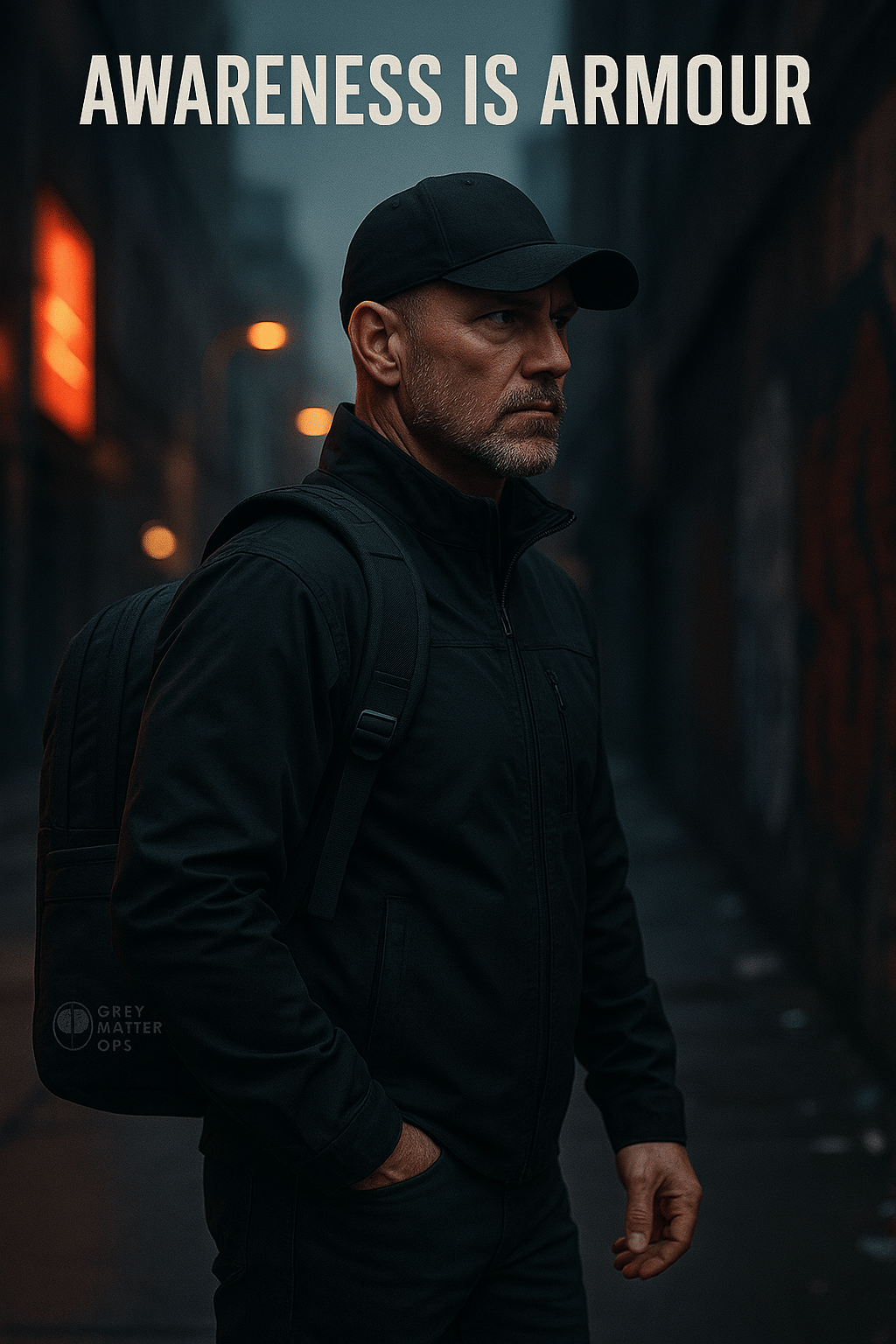
Awareness is Armour.
🎧 Want to Go Deeper?
Listen to the Red Dot Mindset Podcast:
“Situational Awareness: Your First Line of Defense”
A deep dive into real-world strategies for reading your environment, recognizing threats, and staying sharp when it counts.
Remember: Awareness is Armour. For more tactical insights, subscribe to Red Dot Mindset.