

Sometimes, the smallest tools pack the most punch. In the field, redundancy is security—and versatility is survival.
Enter the survival lighter.
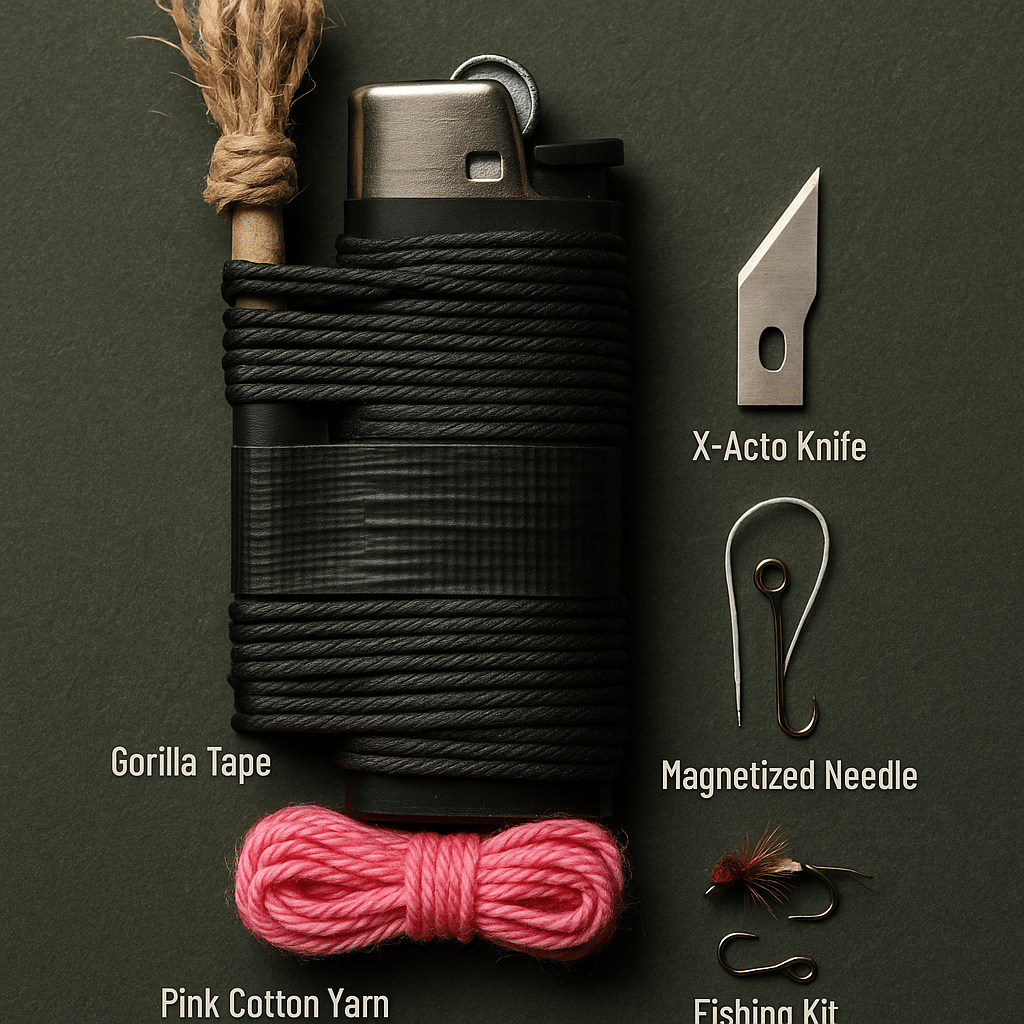
What starts as a standard flame source quickly becomes an elite, pocket-sized micro-kit when enhanced with just a few smart additions. Inspired by one of the most-viewed survival tool videos on YouTube, this blog breaks down the elements of an upgraded lighter—and why every prepared civilian should build one.
🔥 Fire Isn’t Enough. It’s a Starting Point.
A disposable lighter is great—until it's not. Wind, rain, or lack of fuel can turn that tiny spark into a false sense of security. That’s why this enhanced design integrates multi-layered ignition methods and weather-resistant tinder:
✅ Wax-Infused Jute Twine
Attached to the lighter body
Burns hotter and longer than the lighter alone
Excellent for wet or windy conditions
Also ignites easily with a ferro rod if the lighter fails
✅ Cotton Yarn (Pink or Bright Color)
Doubles as fishing lure material
Serves as reliable backup tinder
Fast to catch a spark when conditions are harsh
✅ Knotweed Stem Slider
Natural snuffer and flame control
Preserves tinder and prevents unnecessary burn
Tactical Principle: Redundant ignition methods = increased confidence under pressure.
🧰 Compact Tools. Strategic Edge.
The survival lighter becomes a field-ready asset when it moves beyond fire alone.
🪚 Exacto Blade
Lightweight and razor-sharp
Can be mounted to a stick for carving or cutting tasks
Ideal for precision tasks like notching, feathering, or skinning small game
🧵 Magnetized Needle + Thread
For field repairs (clothing, gear, trauma bandaging)
Needle doubles as a makeshift compass when floated on water
Lightweight, high-utility navigation aid when GPS is down
🎣 Micro Fishing Kit
Fly, hooks, and line stored inside or taped beneath the lighter
Yarn can be used as a crude but effective lure
Offers real protein potential in survival fishing scenarios
Tactical Principle: Every item serves at least two functions—or it doesn't belong.
🛠️ Layered Utility: Wrapping for Survival
The survival lighter’s body is wrapped in layered materials that offer value far beyond protection:
🪢 Bank Line Wrap
Strong, compact cordage
Use for lashing, traps, fishing, shelter building, gear repairs
🩹 Gorilla Tape Wrap
Improvised bandages or splints
Seal leaks in gear or containers
Firestarter in a pinch
Tactical Principle: Outer layers aren’t just storage—they’re assets.
📦 Advanced Upgrades (Optional but Valuable)
To push this EDC tool to the next level, consider integrating:
Fresnel Lens: Flat firestarter using sunlight
Water Purification Tabs: 1–2 in a sealed pouch
Small Reflective Foil: Signaling or fire-starting
Safety Pins: Gear repair, wound closure, or lock manipulation
Unwaxed Dental Floss: Field suture, trap wire, thread, or backup fishing line
💡 Final Thoughts: Train the Tools, Not Just the Tactics
You don’t need a 60-lb rucksack to be prepared.
A properly built survival lighter, carried daily, gives you fire, food, direction, repair, and rescue in the palm of your hand.
This isn’t about gear obsession—it’s about mission effectiveness. If you’re separated from your main kit, caught off-guard, or facing deteriorating conditions, this pocket-sized backup might be the reason you walk away.
Grey Matter Ops Reminder: Awareness is Armour. Redundancy is readiness.
❓ What's In Your Micro Survival Kit?
What tools or multi-use gear would you add to a compact survival lighter setup? Comment below or email your go-to EDC ideas to be featured in an upcoming post.
Remember: Awareness is Armour. For more tactical insights, subscribe to Red Dot Mindset.