
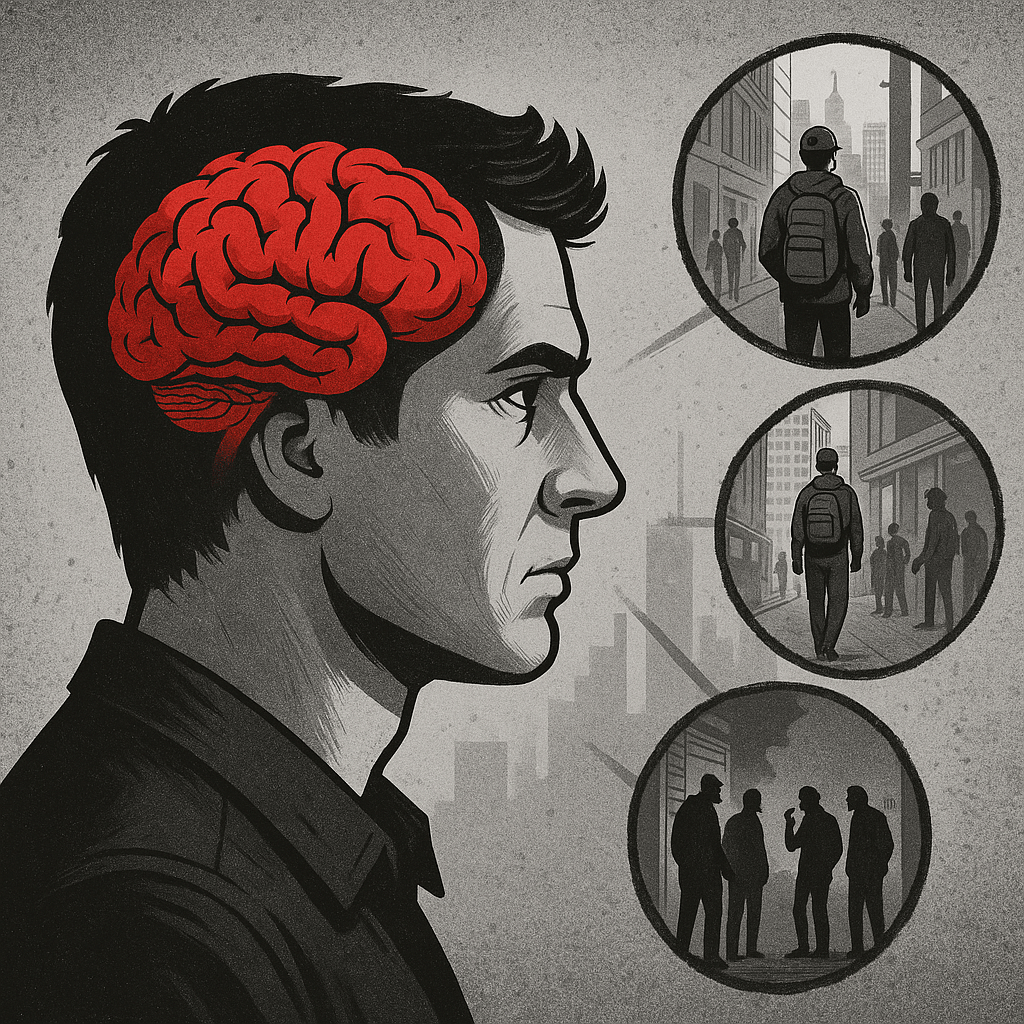
Situational awareness isn’t paranoia—it’s a tactical superpower. When developed with discipline, it becomes your early warning system against threats, your edge in a crisis, and your confidence in chaos. At Grey Matter Ops, we believe this is the single most underrated skill in civilian self-defense—and this blog shows you how to master it.
The Core: What Situational Awareness Really Means
More than just “being aware,” situational awareness is the ability to observe, process, and act—before danger strikes. In tactical terms, it’s described as:
“The ability to identify, process, and comprehend the critical elements of information about what is happening around you.”
— Mastering Situational Awareness for Personal Safety (Welch)
This isn’t about hypervigilance or fear. It’s about having a confident, informed understanding of your surroundings—whether you’re at a coffee shop, navigating a protest, or walking your dog after dark.
🚦 Baselines and Anomalies: How Pros Spot Threats
Professionals start with one core principle: every environment has a “baseline”—a rhythm. Learn the norm, and you’ll spot the abnormal fast.
🛑 Behavioral anomalies: pacing, odd clothing for the weather, obsessive scanning
👜 Physical anomalies: unattended bags, unusual loitering, idling vehicles
🎯 Clustering threats: One red flag might be coincidence. Three is a pattern.
“Someone adjusting their clothing while sweating profusely near a crowded space might indicate an IED under concealment.”
— Cultivating Situational Awareness in Urban Environments
👀 Soft Scans, Hard Scans, and All Senses On
Mastering awareness isn’t about staring down every stranger—it’s about scanning naturally and constantly, without tipping your hand. Two key methods:
Soft Scan: A relaxed 360° sweep using peripheral vision and sound. Ideal for everyday use.
Hard Scan: Deliberate and overt. Used when the threat level spikes.
Use all your senses. Sound, smell, and even subconscious cues can alert you before your eyes do. Posture matters too: Stand upright, head up, eyes engaged.
🧭 The OODA Loop: Process Like a Pro
This tactical framework—Observe, Orient, Decide, Act—was developed for combat pilots but works for civilians just as well:
Observe: What’s happening around me?
Orient: How does this affect me, right now?
Decide: What’s my best course of action?
Act: Execute—then re-loop.
This loop should run continuously, adapting as the environment shifts.
⚠️ Recognizing Threats in Civilian Life
Situational awareness applies to more than crime. It includes:
🧨 Terrorism: Suspicious surveillance or abandoned packages
🔫 Active shooters: Know the exits, commit to “run-hide-fight” early
🔥 Natural disasters: Know your Positioning, Navigation, and Timing (PNT)
🧪 Public health emergencies: Crowd avoidance, timing, and route selection
🧠 Train the Brain: Mental Reps for Real-World Situations
Like any skill, situational awareness improves with repetition. Try these micro-drills:
⏱️ 3-Second Scan: Every time you enter a room, ID the exits, staff, and any anomalies
🚶 The Familiar Walk Challenge: Spot something new on a route you walk daily
👀 People Watching: Practice baseline identification in a public place
💡 Building Intuition and Stress Resilience
What people call “intuition” is really pattern recognition at high speed. It’s not magic—it’s earned through observation and reflection. Here’s how to strengthen yours:
🧘♂️ Box breathing under stress
📝 After Action Reviews (AARs)
🏋️♂️ Regular physical training to raise your panic threshold
Avoid normalcy bias—the belief that “nothing bad will happen.” Mentally rehearse what you’ll do when something goes wrong.
🛡️ Awareness + Action = Survival
Awareness without action is just observation. But awareness plus action? That’s survival.
“If you can’t manage stress or panic, you might freeze at the worst possible time.”
— Mastering Situational Awareness: Skills to Keep You Safe Anywhere
Stay calm. Stay sharp. Stay ready.
📚 Source Acknowledgement
This article synthesizes material from multiple expert briefings and online safety manuals, including:
Mastering Situational Awareness for Personal Safety — Welch
Cultivating Situational Awareness in Urban Environments
Mastering the Soft Scan and The Art of the Soft Scan
Master Threat Detection in Crowded Places
Mastering Everyday Situational Awareness
Credit is due to all original authors, researchers, and practitioners who contributed to these frameworks.
Train the Mind. Win the Fight.
Grey Matter Ops | Awareness is Armour
Remember: Awareness is Armour. For more tactical insights, subscribe to Red Dot Mindset.