
The PACE framework — and the night an army ran the Emergency tier across a frozen river

Ice on the oars. Not falling snow — ice, the kind you have to break off the wood with your hands before you can even grip it. Men who hadn't eaten a real meal in two days, loading into boats they could barely see. Two other crossings supposed to be happening somewhere out in the same dark, and nobody on this riverbank knowing whether either one would make it.
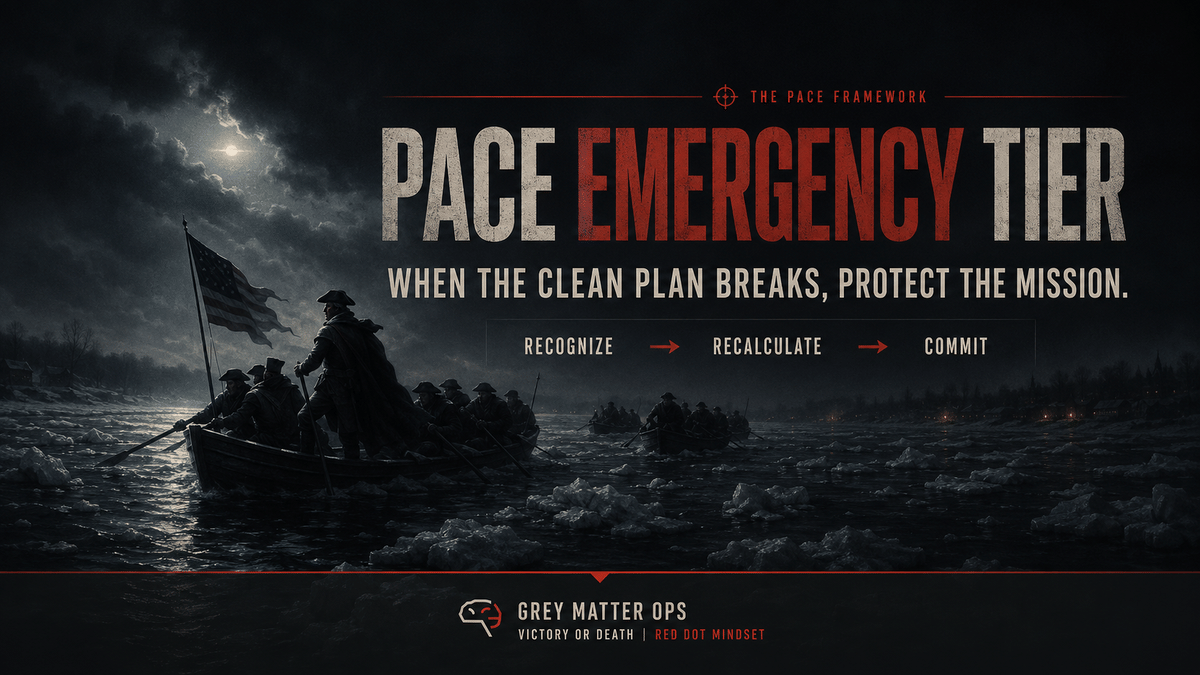
That was Christmas night, 1776. Washington's plan was already coming apart before a single shot was fired — and he still won the fight that arguably saved the Revolution.

That's not a history lesson. That's a field lesson. And it's the clearest example I know of the tier most people never train for.
At Grey Matter Ops, we don't train for perfection — we train for disruption. When the stakes are high, plans fail. That's not pessimism; it's the reality of dynamic, high-pressure environments. The question is never whether your plan breaks. It's whether you stay operational after it does.
That's where the PACE framework comes in.
This article is the field-manual companion to the Red Dot Mindset episode "Victory or Death," from the America's 250th series. The episode tells the story cinematically. This breakdown translates that same night into the PACE framework — and shows why Washington wasn't operating from a clean backup plan. He was executing the Emergency tier.
🔷 What Is the PACE Framework?
PACE stands for:
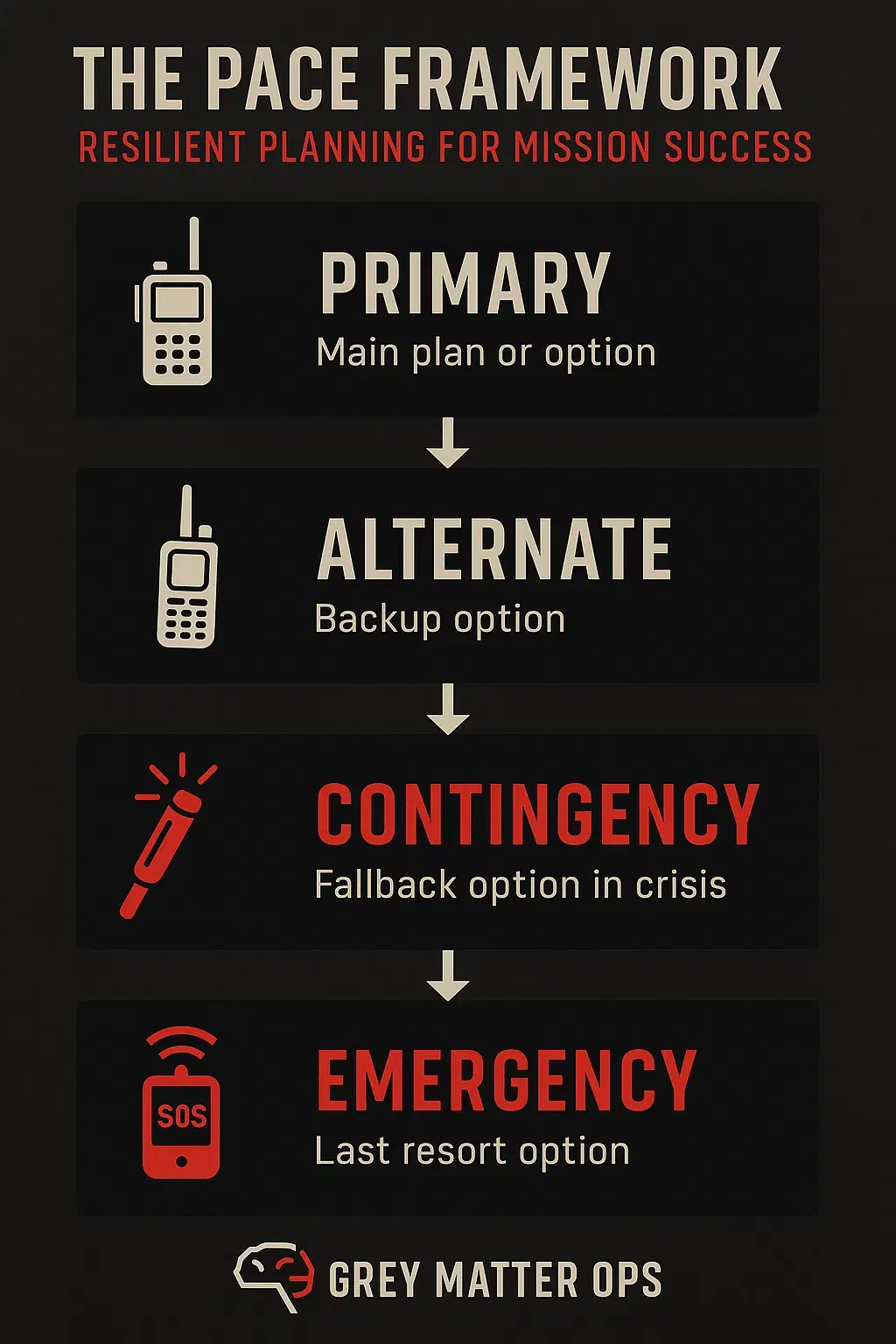
The structure originated in military and emergency communications planning — four redundant paths, ranked in order of precedence, so critical parties could still connect when preferred systems failed. At Grey Matter Ops, we apply that same layered logic to the whole mission, not just the radio.
It's a planning model built for real-world resilience, not ideal conditions. Each tier is a pre-loaded fallback for when the one above it fails — so you're acting from rehearsed decision points instead of panic. Whether you're running a mission, a business, or protecting your family, PACE keeps you functional when your first, best option falls apart.
It's not just smart planning. It's survival thinking.
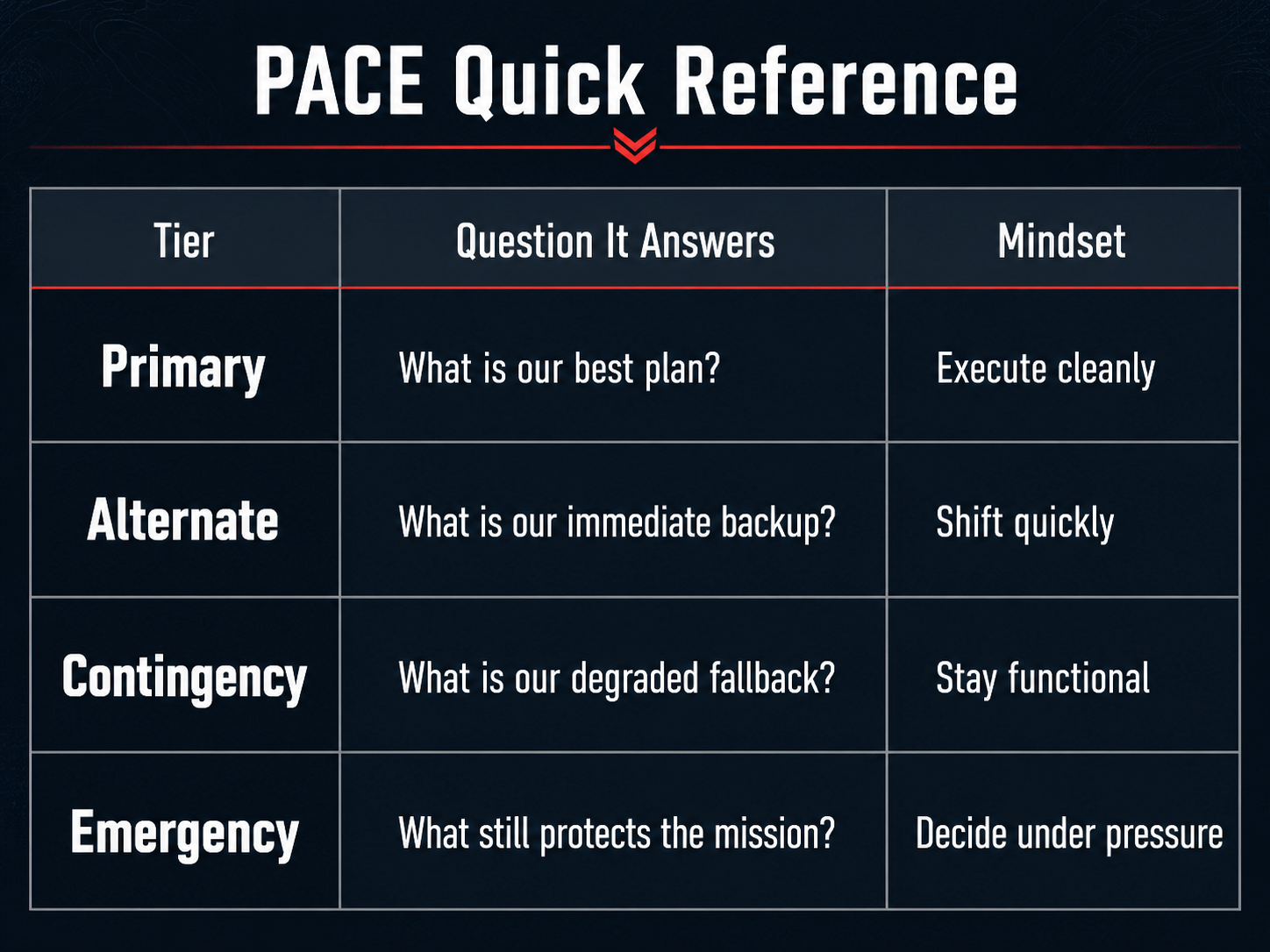 |
|---|
🔵 Primary (P) — The Plan You Count On
Your first, best option. Efficient, familiar, and usually the most resource-heavy — which also makes it the most vulnerable to disruption.
Everyday example: Delivering a mission briefing in person with full tech and visuals.
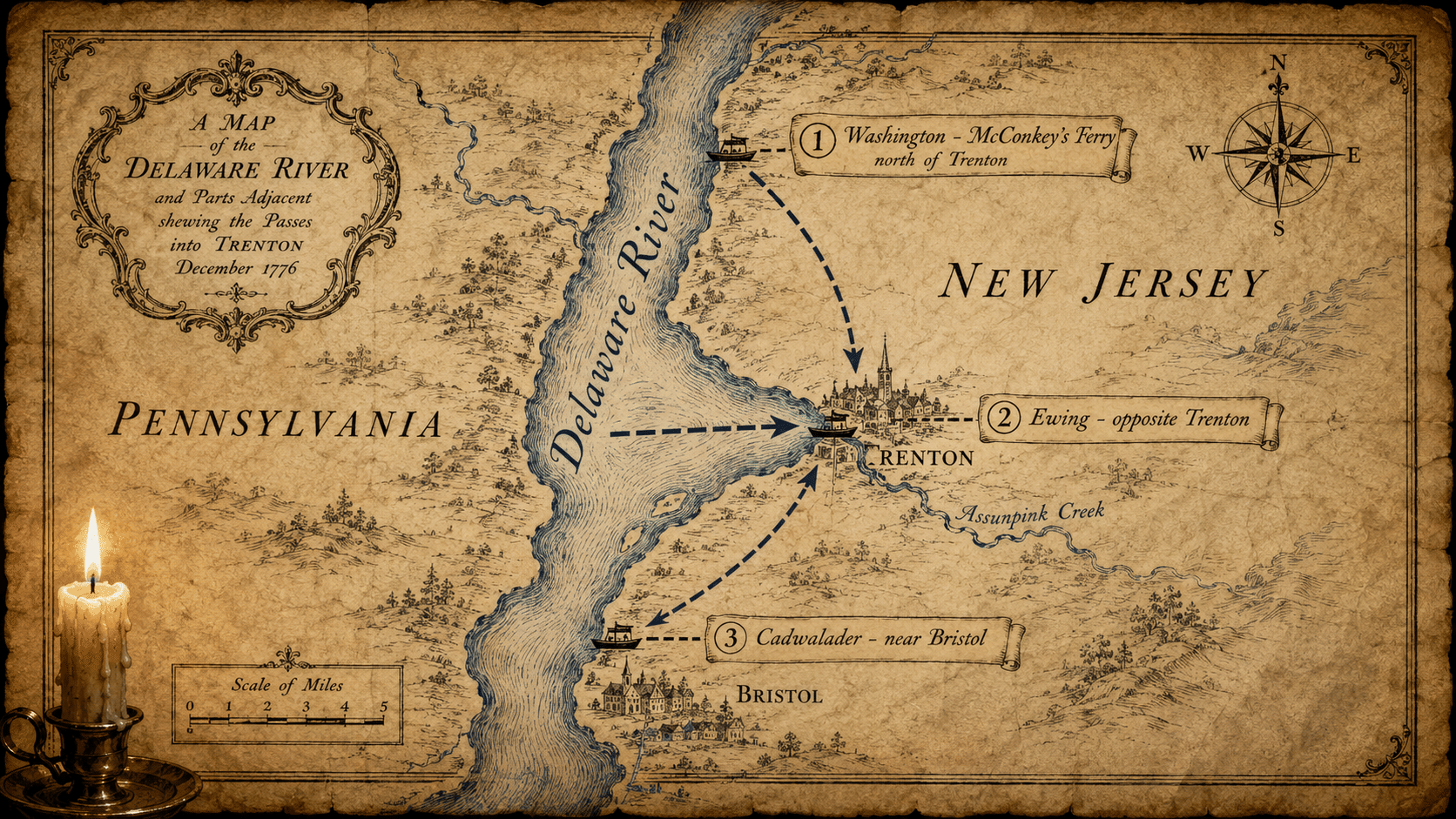
Trenton: Washington's Primary was a coordinated three-column night attack — roughly 2,400 Continentals under his own command crossing at McConkey's Ferry, James Ewing's 700–800 Pennsylvania militia crossing to seize the bridge below Trenton, and John Cadwalader's roughly 1,800 men crossing further south to pin British reinforcements. Three columns, one night, one hammer blow, delivered under cover of darkness. That was the plan he built and rehearsed.
🟡 Alternate (A) — Your Immediate Backup
In plain language, this is what most people call Plan B. In PACE, it is your Alternate — the immediate backup that should deploy fast and with minimal friction the moment the Primary falters.
Everyday example: Switching to Zoom or Teams when travel is blocked or the in-person briefing falls through.
The Alternate is what you reach for when one thing goes wrong. The problem — as Washington was about to learn — is that in a real crisis, things rarely go wrong one at a time.
🟠 Contingency (C) — For When Things Get Complicated
This tier assumes both your Primary and your Alternate are already gone. Not ideal. Still gets the job done.
The key distinction: Contingency is still pre-planned. It's degraded, uncomfortable, and less efficient — but you identified it before the crisis. Emergency is what remains when even the clean fallback no longer fits the conditions in front of you.
Everyday example: Sending a pre-recorded video or a detailed written brief when live communication isn't possible at all.

Here's the uncomfortable truth about Trenton: Washington's plan had no clean Alternate and no clean Contingency built beneath it. When the Primary broke, there was no orderly step down through the tiers — he fell straight from P to E.
That's not a flaw in the example. That's the lesson.
Real-world failures don't politely descend one tier at a time, which is exactly why the bottom tier has to be trained, not assumed.
🔴 Emergency (E) — Minimum Viable Outcome. Mission Protected.
This is the tier the whole framework exists to survive. Bare-bones. Everything above it has failed. What you have left is a fraction of what you planned for — and the mission still has to happen.
The Emergency tier is still inside your plan. It's the part where the detailed script runs thin and your discipline carries the weight. And there's a method for running it:
Recognize → Recalculate → Commit.
We'll break that down in a moment.
Everyday example: Critical updates pushed by SMS or a single direct call, or a controlled fallback protocol, when every richer channel is down.
Trenton — the real one: This is where Washington actually was.
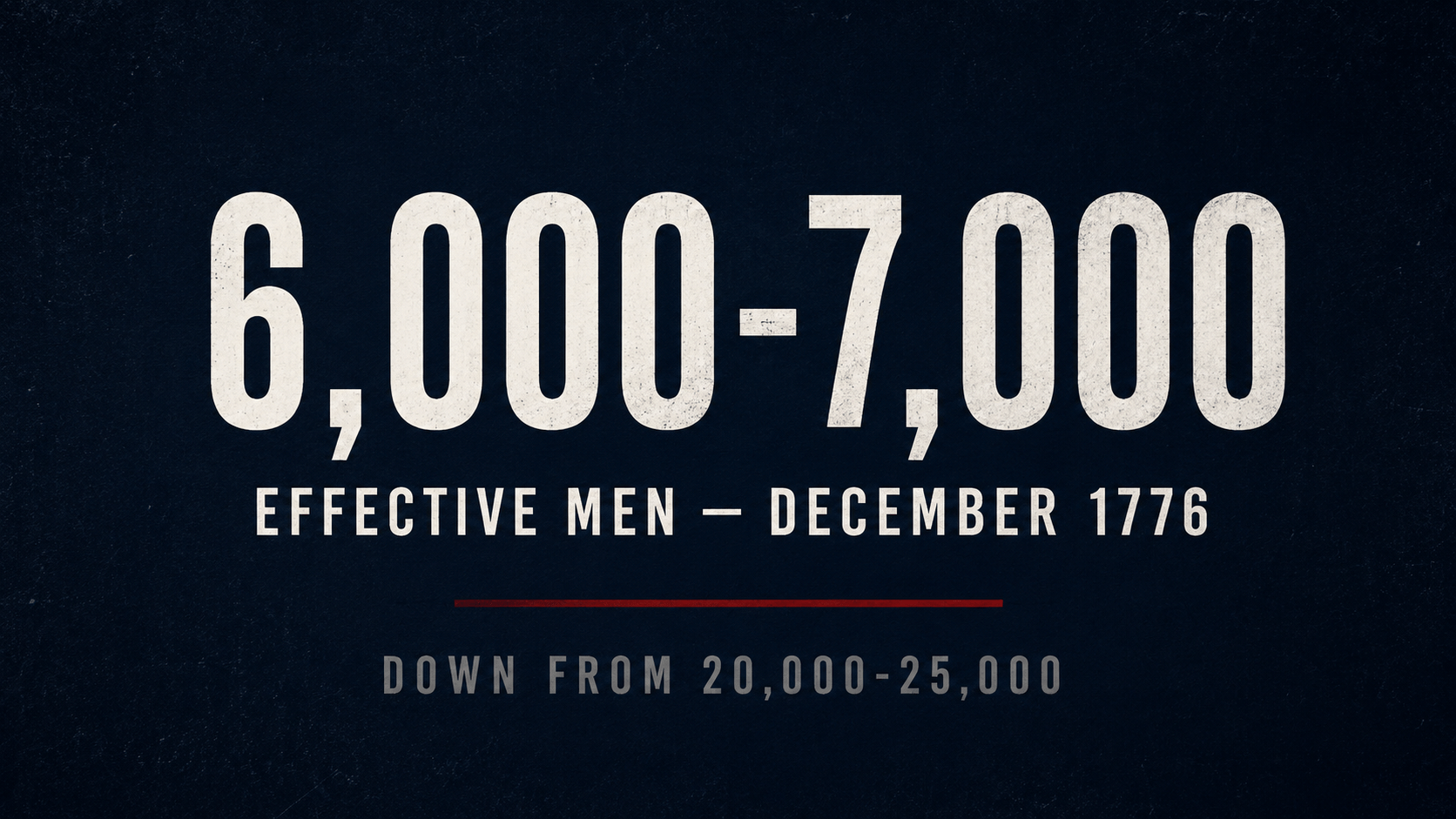
By December 1776, his army had collapsed from more than 20,000 men during the New York campaign down to roughly 6,000–7,000 effective troops strung along the Delaware. Worse: most of those enlistments expired on December 31st — by the calendar, contractually, in days. He didn't just need a win. He needed one before his only army was legally entitled to walk home.
Then his Primary came apart in the dark, one failure stacked on another:
Ewing never crossed. No enemy fire — ice and current beat his column before it could move.
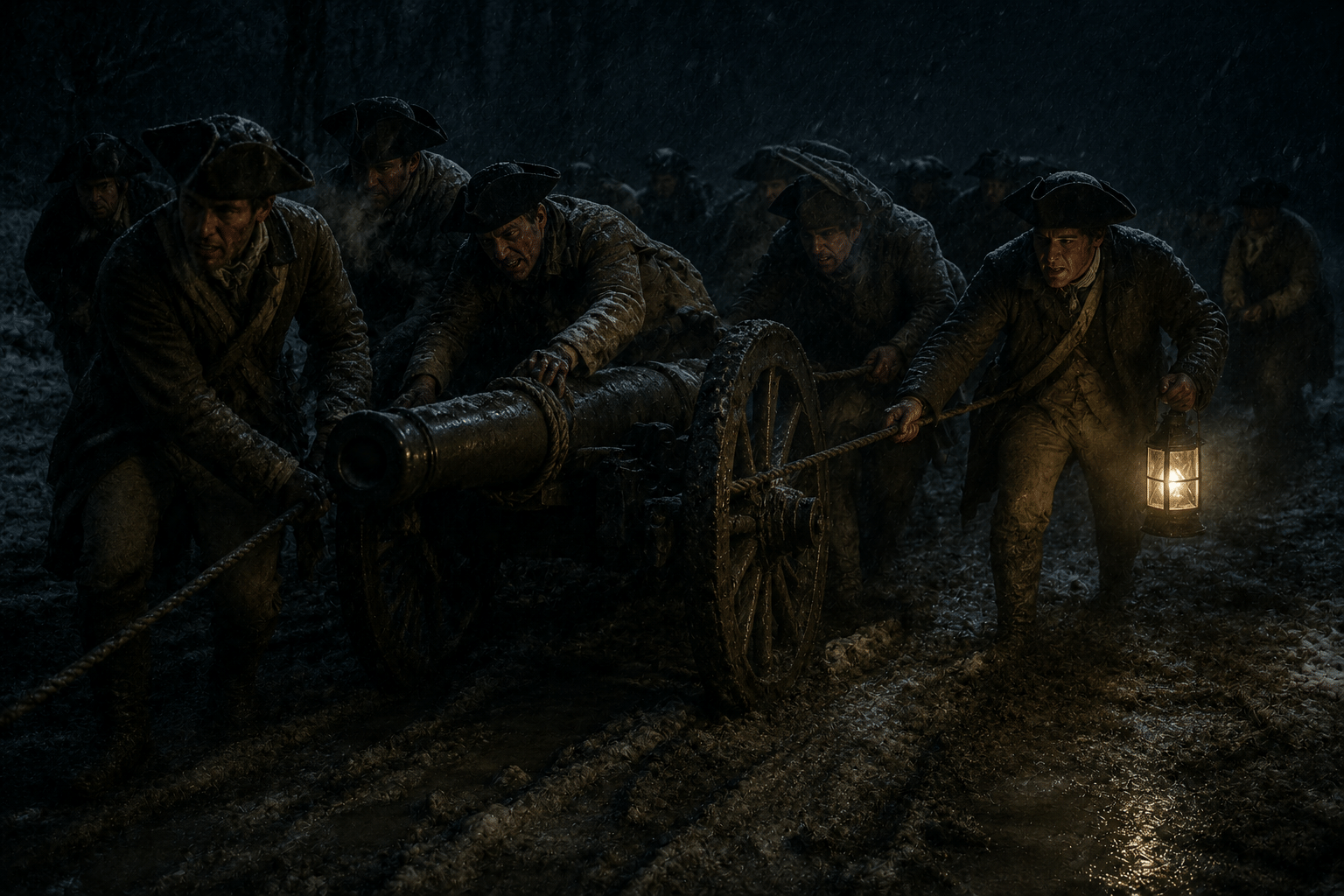
Cadwalader got some men over but couldn't land his artillery on the icy bank, and made the disciplined call to pull them back rather than commit them alone.
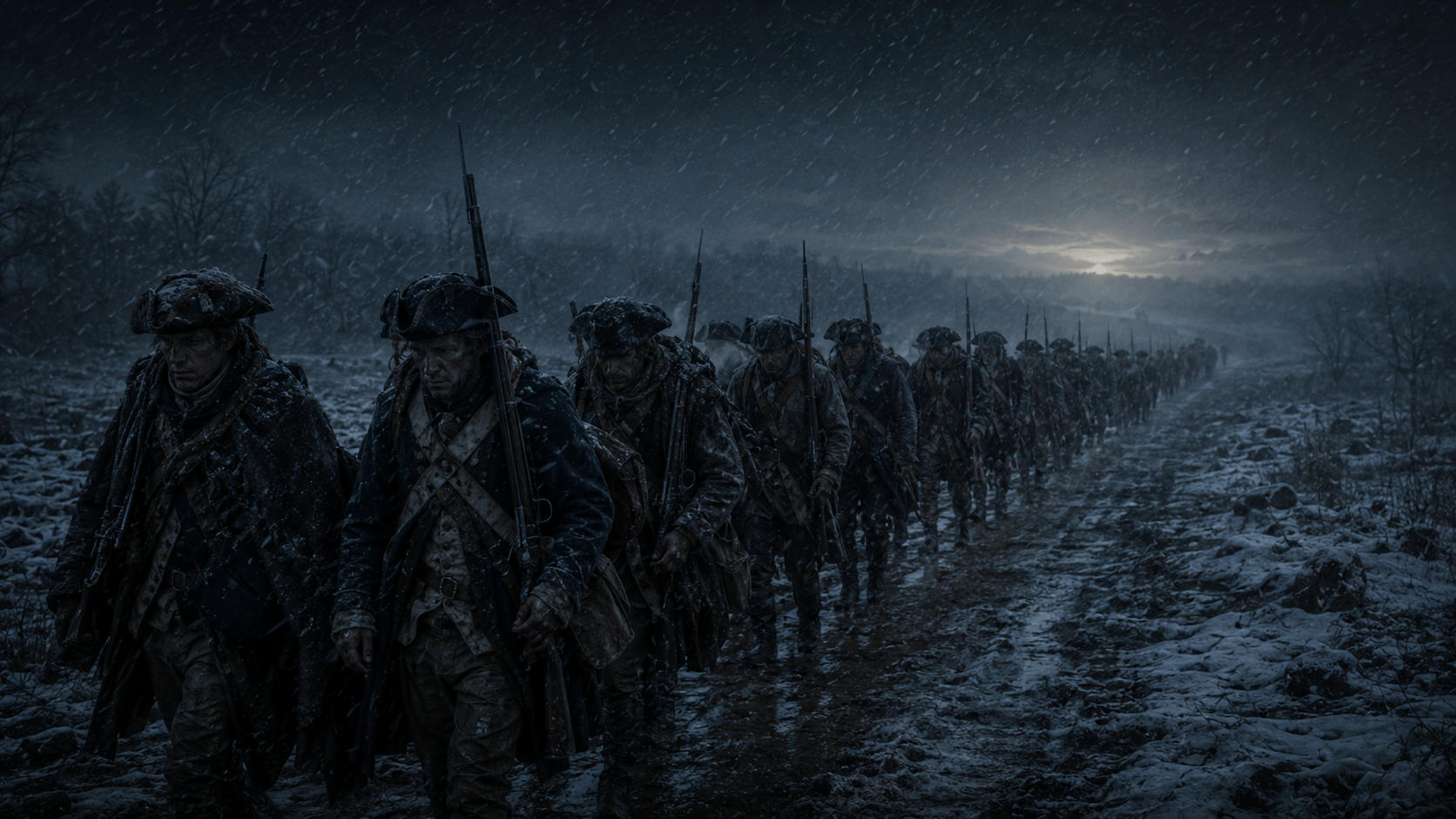
The schedule slipped past the thing the whole plan depended on. Washington's column didn't finish crossing until around 3 a.m., hours behind. After a nine-to-ten-mile march through the storm, the attack didn't open until roughly 8 a.m. — in daylight. Darkness wasn't atmosphere. In 18th-century linear warfare, darkness was cover. And it was gone.
Sit with the position: two-thirds of his plan was dead, his timing advantage was dead, he was already across an icy river with no clean way back, and he had no reliable confirmation the other columns even existed. He wasn't falling back to a tidy Alternate or a clean Contingency.
He was down to the Emergency tier — one column, daylight, minimum viable force, mission protected or nothing.
In plain language, people often call this a "Plan C" moment. In the Grey Matter Ops PACE model, that term is more precisely understood as the Emergency Tier — not a clean Contingency, but the disciplined execution of the mission when the clean fallback no longer exists.
What Washington did next is the clearest picture of running the Emergency tier well that American history has to offer.
🧠 How You Actually Run the Emergency Tier: Recognize → Recalculate → Commit
Here's the hard truth about the Emergency tier: by definition, it's where your detailed plan has already run out. You can't script your way through it in advance. What carries you is a method — three moves you can run when it's your turn.
These aren't a fifth letter. They aren't a new plan, and they aren't some separate answer you build outside your framework. They're how you execute the E when the E is all you have left.
1. Recognize. Admit — clearly, without denial — that the plan you built is gone. Not "it's a little behind schedule." Gone. Primary adherence is white-knuckling the original design after the conditions it depended on have already disappeared. Real discipline is naming the death of the plan out loud and staying functional anyway. Washington recognized that retreating — recrossing an icy river in daylight, under possible fire, with an exhausted army — was now more dangerous than pushing forward. In his own words afterward: "I determined to push on at all events." That's not bravado. That's cold math on a plan that no longer exists.
2. Recalculate. Take honest stock of what's actually left. People, resources, time, routes — what you have, not what you wish you had. Washington had one column instead of three. He had eighteen guns Henry Knox had kept dry and functional. He had a storm still running, and an enemy whose assumptions he could exploit. He counted the assets on the table, not the ones he'd lost on the far bank. That's the move most people skip: inventorying what's still real instead of grieving what's already gone.
3. Commit. Make the next controlled move without waiting for perfect information — because in the Emergency tier, perfect information usually is not coming. Not freezing. Not panicking. Not scrapping the mission out of fatigue or fear. A clear-eyed decision made with degraded information, because degraded information was the only kind on offer.
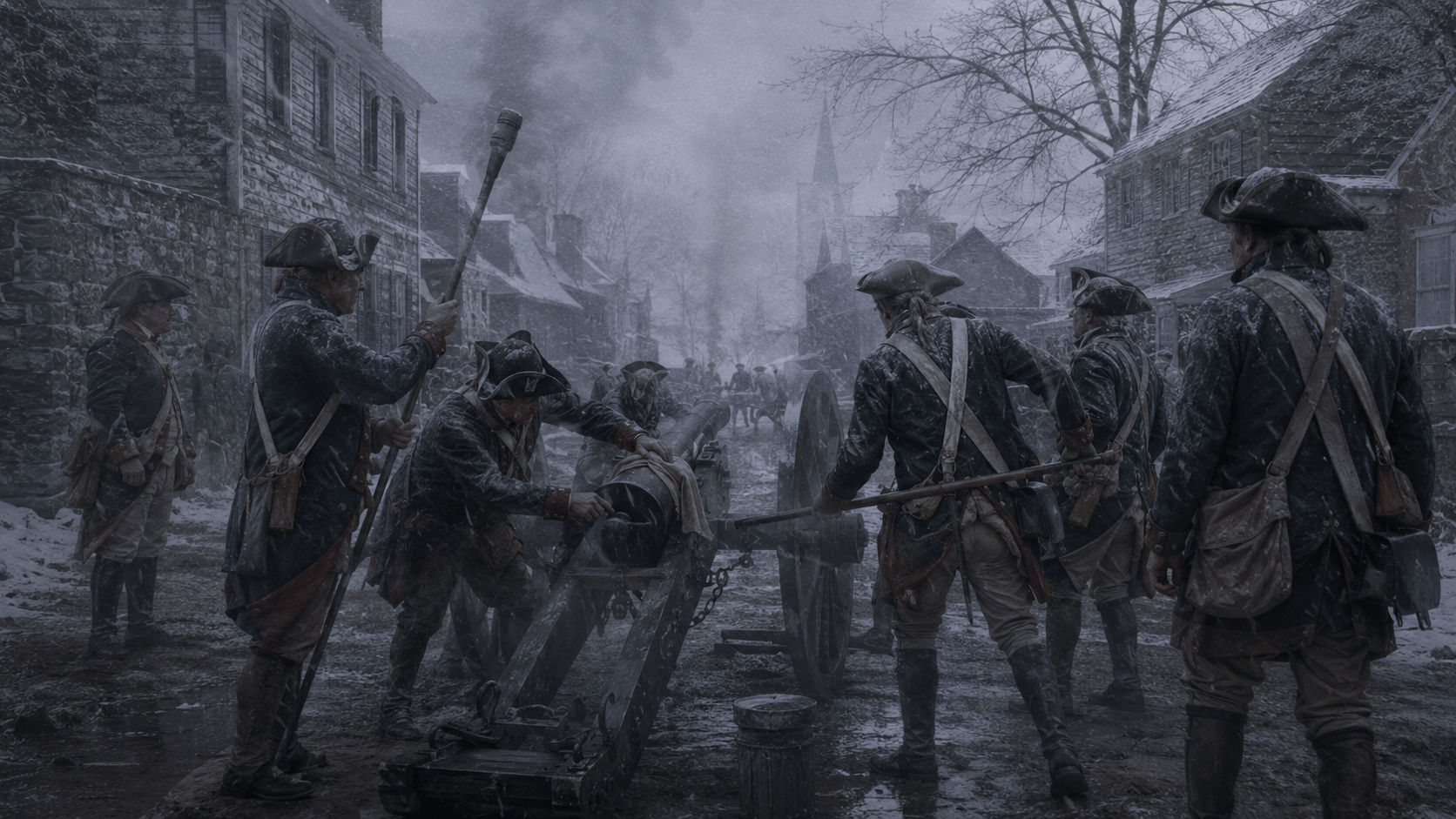
Why it worked — and why it wasn't luck. The same storm that nearly wrecked the crossing fouled muskets on both sides that morning. Knox's artillery crews kept their touchholes dry and stayed in the fight while infantry small arms went silent — working firepower carried the day. And on the other side, Colonel Johann Rall's roughly 1,400 Hessians were not the drunk, sleeping garrison of legend — that's a myth. They were experienced troops. Rall had real warnings from multiple channels; he waved them off because they didn't fit his picture of what a broken, freezing army was capable of. Multiple indicators, sitting in front of a trained officer, dismissed because they contradicted his assumptions.
The result: roughly 22 Hessians killed and around 900 captured, against minimal American losses — a young officer named James Monroe wounded, and two men lost to exposure on the march itself.
Emergency tier. Executed well. Mission protected.
The Revolution did not survive that night because the plan worked perfectly. It survived because Washington kept making controlled decisions after the plan broke.
🎬 Watch the companion episode: "Victory or Death" is the cinematic Red Dot Mindset breakdown of this same night. Watch the episode, then use this article to stress-test your own PACE framework.
🧠 Why the PACE Model Matters
Anyone can plan for success. Professionals plan for everything else.
🔧 Reduces panic: The next move is already named.
🧠 Protects cognition: You're not inventing the plan under stress.
💡 Improves clarity: Each tier has a purpose before pressure hits.
🛡 Protects the mission: The outcome stays alive even when the method changes.
🎯 Builds disciplined adaptability: You shift with control, not chaos.
💡 Everyday Tactical Examples
Home Defense
Primary: Alarm system
Alternate: Dog and motion lights
Contingency: Manual barricades
Emergency: Safe-room fallback and rehearsed response
Travel Planning
Primary: Direct flight
Alternate: Alternate airport or connection
Contingency: Train or rental vehicle
Emergency: Cancel and execute virtually
Family Emergency Communication
Primary: Group call or family text thread
Alternate: One designated out-of-area contact
Contingency: Pre-set rally point and check-in window
Emergency: One-word status code by SMS, voicemail, or any available channel
Workplace Disruption
Primary: Full in-person meeting with slides and systems access
Alternate: Video call with shared documents
Contingency: Written decision brief sent to key leaders
Emergency: One decision-maker, one priority, one critical instruction pushed through any available channel
Notice the pattern: the failures that put you into the Emergency tier rarely announce themselves. They come the way Washington's night came — quietly, incrementally, one break stacked on another, while you're already committed and moving. There's no alarm bell that says the plan is officially dead. You have to recognize it yourself.
🔗 Implementing PACE in Your Life
PACE isn't just crisis survival — it's a leadership framework. It signals that you think ahead, protect your people, and own the moment.
Define your mission. What actually has to survive?
Map your failure points. Where does each tier realistically break?
Build four honest tiers — Primary through Emergency — using resources you'll actually have, not the ones you wish you had.
Communicate clearly, especially inside a team or family unit.
Rehearse and refine — and rehearse the Emergency tier specifically. Run Recognize → Recalculate → Commit out loud, on paper, in a drill, before the day you have to run it for real.
Most people train for the Primary. The disciplined ones train the Alternate. Almost nobody trains their mind for the moment both are gone and a call still has to be made. That's the gap the Emergency tier is built to close.
The takeaway isn't "have a better Plan B." Everybody knows that one. It's this: build enough mental flexibility that you can still make controlled decisions after the plan breaks. Not perfect decisions. Not decisions with full information. Ones you can stand behind, made with a clear head, in the wreckage of the plan you actually wanted to run.
That's the mindset that got a freezing, half-starved army across an ice-choked river and into a fight it had no business winning. And that's the real job of PACE: not protecting your Primary, but protecting your ability to decide when the Primary is gone.
Train the Mind. Win the Fight.™
Awareness Is Armor.™ For more tactical insights, subscribe to Red Dot Mindset.
Stay Grey. Stay Ready.™
Grey Matter Ops™ | Red Dot Mindset™
Remember: Awareness is Armour. For more tactical insights, subscribe to Red Dot Mindset.