
When confrontation feels like combat, what if you could win without raising your voice?
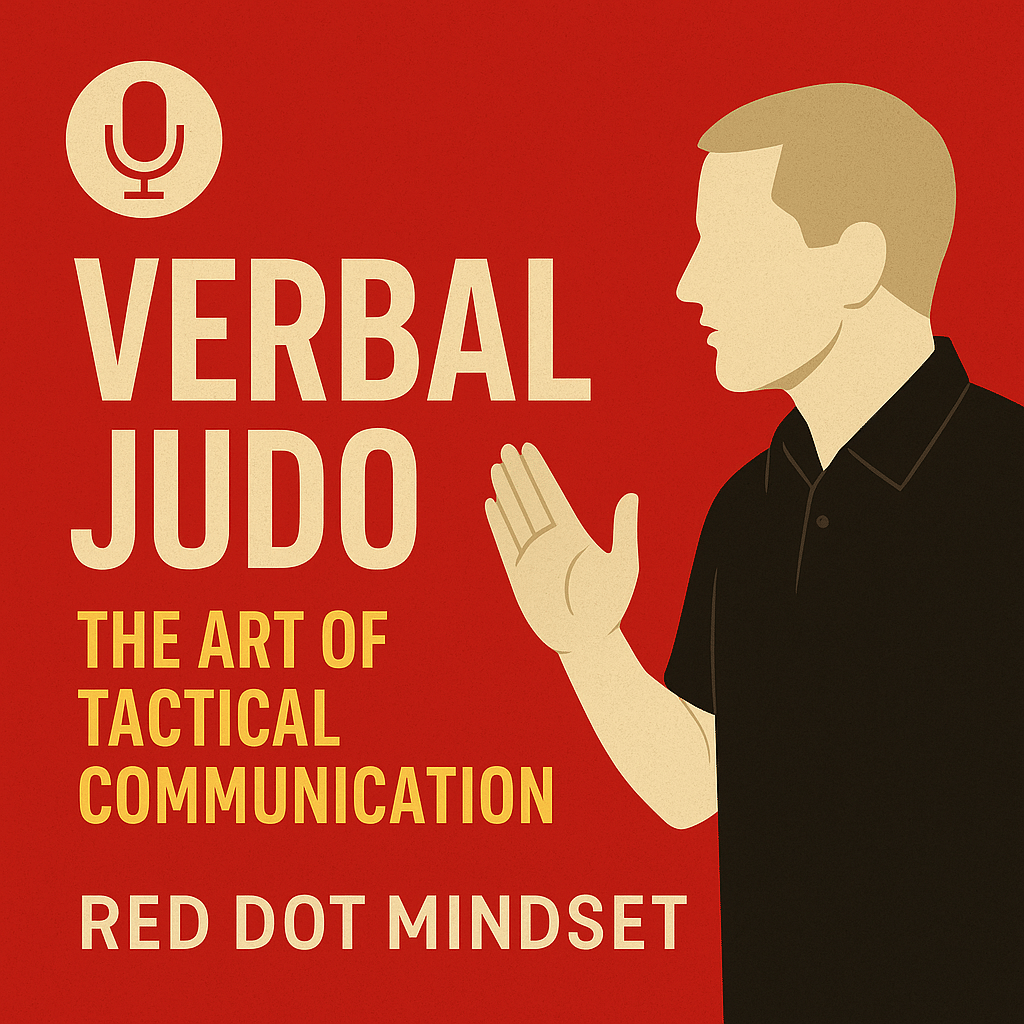
That’s the principle behind Verbal Judo, a tactical communication method developed by the late Dr. George Thompson—a former police officer and professor of rhetoric. Thompson fused martial arts principles with real-world de-escalation strategies to create a powerful framework for navigating verbal conflict.
💬 Why Verbal Judo Still Matters
Born in law enforcement, Verbal Judo has evolved into a universal skill set. Whether you’re managing a team, navigating family dynamics, or dealing with public encounters, knowing how to steer a tense conversation can be the difference between chaos and cooperation.
🥋 Karate vs. Judo: The Communication Metaphor
Thompson contrasts two verbal mindsets using martial arts:
Karate: Direct and forceful — strike hard, stop the attack.
Judo: Use the opponent’s energy — redirect, deflect, neutralize.
Verbal Judo embraces the judo mindset—leveraging emotional momentum to defuse, not escalate.
🧠 The Core Principles of Verbal Judo
Empathy – Understand Before Being Understood
People want to feel heard. Empathy cools emotions and sets the tone for cooperation.
Mushin – Stay Calm, Stay Centered
Mushin (“no-mind”) means calm presence under verbal attack. It prevents emotional hijack.
Impartiality – It’s Not Personal
Don’t let ego cloud your response. Stay mission-focused, not reactive.
🔄 Reading and Responding: The Tactical Flow
Thompson categorized conflict participants into three types:
Cooperative – Responds to clear, respectful communication.
Resistant (“Why” types) – Needs reasoning and explanation to gain buy-in.
Passive-Aggressive – Appears agreeable but resists through delay or sabotage.
Adapt your communication to the person in front of you—with calm clarity and respect.
🧭 The Five-Step Persuasion Method
Ask clearly and respectfully
Explain the reason
State the consequences
Offer help: “What can I do to help you go along with this?”
Follow through with calm integrity
This preserves the other person’s agency while protecting your authority.
👂 Active Listening: Tactical Listening for Tactical Situations
Verbal Judo isn’t just about talking. It’s about tactical listening:
Clarify the issue with direct questions
Reflect concerns to show you’re tracking
Use calm body language and eye contact
Listen to understand—not just reply
🤝 Control Without Condescension
Even in a position of authority, avoid sounding patronizing. Use collaborative, respectful language. People resist commands—but respond to options.
🧘♂️ Leave Your Ego at the Door
When tensions rise, acknowledge emotion without being baited.
“I hear you’re frustrated. Let’s work on a solution.”
This mirrors concern, reframes the situation, and redirects the energy toward resolution.
🧠 Final Thoughts: Tactical Talk for Tactical People
Verbal Judo isn’t about winning arguments—it’s about using calm, empathy, and strategy to turn conflict into cooperation.
Whether you're managing a crisis, defusing a family dispute, or holding ground in a heated meeting, these principles help you lead with strength—not volume.
🛡️ Grey Matter Ops Insight
Tactical communication is core to operational readiness.
At Grey Matter Ops, we teach that calm, clear persuasion is as critical as any physical tool.
Train the Mind. Win the Fight.
Awareness is Armour.
Want more mindset tactics like this? Follow our podcast, Red Dot Mindset, and explore the fieldcraft of communication under stress.
Remember: Awareness is Armour.
Remember: Awareness is Armour. For more tactical insights, subscribe to Red Dot Mindset.